
Quick answer
How do you arrange safe transportation for a dementia patient to a doctor appointment?
Safe transportation for dementia patients means a door-to-door ride, a familiar person riding along or waiting at the clinic, and a plan for the whole visit. Book 24–48 hours ahead, schedule at the person's best time of day, bring medications and notes, and choose a wheelchair or ambulatory ride based on how they move.
In this guide
- The short answer
- Why transportation for dementia patients takes extra planning
- Which ride fits your loved one?
- Taking someone with dementia to a doctor appointment, step by step
- What to bring to the appointment
- Memory care transportation for communities
- How rides are paid for
- Dementia caregiver transportation help in Wayne, Oakland and Macomb
- Frequently asked questions
- One less thing to worry about on appointment day
Your mother has a neurology follow-up at 10 a.m. She asked three times last night where she's going. This morning she doesn't want to put her shoes on, and you still have to get her out the door, across town and into a waiting room without anyone getting upset. If that sounds familiar, you're not doing anything wrong — the trip is often the hardest part of the appointment.
This guide is about transportation for dementia patients: how families and memory care staff in Wayne, Oakland and Macomb Counties can choose the right ride, plan around the person's good hours, decide who goes along and keep the day calm from the front door to the exam room and back.
It's written for adult children and spouses caring for someone at home, and for the activity directors, nurses and schedulers in memory care communities who book these trips every week.
The short answer
Plan the whole visit, not just the drive. Book a door-to-door ride 24–48 hours ahead, at the time of day the person is usually calmest. Have a familiar person ride along or meet them at the clinic, bring the medication list and your notes, and pick a wheelchair or ambulatory ride based on how they move. CuraTransit offers both, with a companion seat at no extra hassle. Call 248-320-9092 or book a ride.
Why transportation for dementia patients takes extra planning
A ride to the doctor asks a lot of someone living with dementia: leaving a familiar place, getting into a vehicle with a stranger, a new building, a waiting room, questions they may not be able to answer, and the trip home. The National Aging and Disability Transportation Center notes that confusion, reduced judgment and communication problems — not just memory loss — make it hard for people with dementia to arrange a ride, reach the vehicle and remember the destination or the way home (NADTC).
That's why a regular taxi or rideshare pickup at the curb so often goes wrong. The problem usually isn't the drive itself. It's the gaps: the walk from the door to the car, the moment the driver leaves at the clinic entrance, the wait for a ride home that may not come on time.
Good transportation for dementia patients closes those gaps:
- Door-to-door help, so the person is never left alone at a curb or in a lobby
- A familiar person in the companion seat or waiting at the destination
- A predictable routine — the same pickup time, the same steps, and the same driver when possible for repeat visits
- A return trip planned in advance, so nobody is left waiting at the end of a tiring appointment
Which ride fits your loved one?
Dementia affects people very differently, and mobility often changes as the disease progresses. Match the ride to how the person moves and how much help they need today, not a year ago.
| Situation | Usually the best fit | Why |
|---|---|---|
| Walks well, early stage, a family member rides along | Family car or an ambulatory ride | Fine if transfers are easy and the person stays calm in the car |
| Walks with a cane or walker, gets anxious or unsteady | Ambulatory door-to-door ride with a companion | The driver helps from the door to the vehicle and into the building |
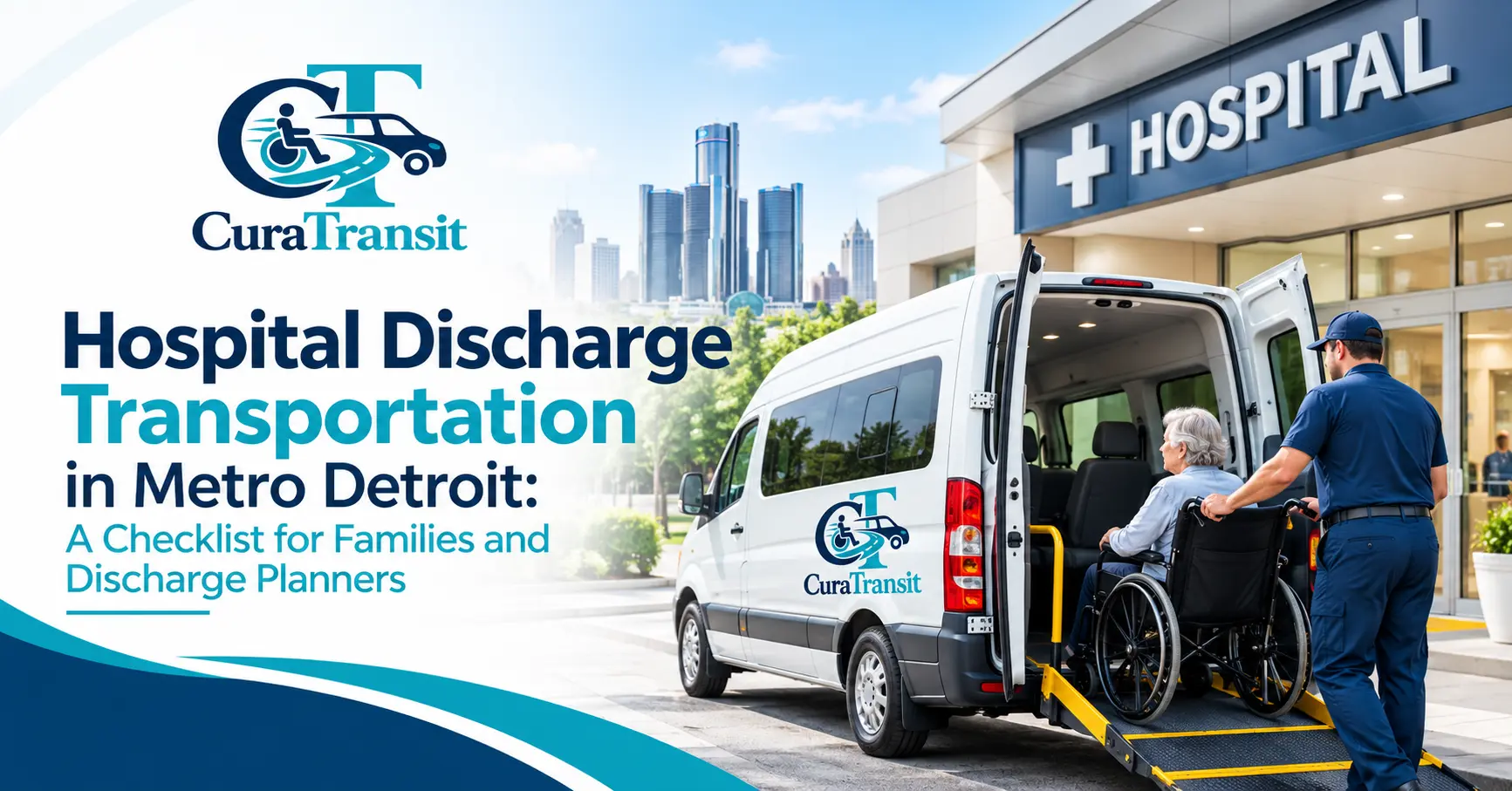
| Uses a wheelchair, or can't transfer into a car safely | Wheelchair van for dementia patients | They stay in their own chair, secured for the trip — no car transfer |
| Lives in memory care, needs staff sign-out | Wheelchair or ambulatory ride booked by the community | Pickup and return follow the community's sign-out and handoff procedures |
| Must lie flat or needs monitoring en route | Ambulance | CuraTransit does not provide stretcher transport — use an ambulance provider |
A wheelchair van for dementia patients is often the calmer choice even for someone who can still stand. Transferring from a wheelchair into a low car seat is where falls tend to happen, and a person who doesn't understand why they're being moved may resist halfway through. Rolling up a ramp in their own chair is simpler. For more on how the two ride types compare, see wheelchair van vs. ambulance vs. rideshare.
Taking someone with dementia to a doctor appointment, step by step
These steps work whether you're booking one visit or setting up a standing schedule.
- Pick the best time of day. Many caregivers find their loved one is most settled in the late morning, and that confusion increases later in the day (often called "sundowning"). Ask the clinic for the first or second appointment of the morning, or whatever time you know works best.
- Book 24–48 hours ahead. Share the appointment time, full address, suite or department, and how long the visit usually takes. Same-day rides are sometimes possible, but a rushed morning is hard on everyone.
- Tell us what helps. How the person moves (walker, manual or power wheelchair), whether there are steps at home, and anything the driver should know — for example "she does better if you introduce yourself by name" or "he may ask the same question several times." You know your loved one; we'll follow your lead.
- Reserve the companion seat. If you, a spouse or a home caregiver will ride along, tell us when you book. A familiar face in the van makes a big difference.
- Book a round trip with an estimated end time. Your return pickup is planned before you leave the house. If the visit runs long, call and we'll adjust.
- Keep the morning simple. Lay out clothes the night before, keep explanations short and calm, and avoid announcing the appointment too far ahead if that tends to cause worry.
Here's how that can look in practice. Say a Royal Oak family books a round trip for Dad's 10:30 neurology visit. His daughter rides in the companion seat; the driver meets them at the front door, helps Dad down the two porch steps and into the van, then walks them both to check-in. The return pickup is booked for noon, so they're home before lunch — and before the part of the day when Dad usually gets tired.
Booking a visit for a parent? Call 248-320-9092 or book online. We'll confirm the ride type, the companion seat and the price before the day of the appointment.
What to bring to the appointment
The Alzheimer's Association suggests going to each visit with written questions, notes on any changes in behavior or routine, and the medication containers or a complete list of medications and supplements — and leaving with a clear summary of next steps (Working with the doctor). For the ride itself, add:
- ID, insurance cards and the clinic's paperwork
- Glasses, hearing aids and the person's walker or wheelchair
- A snack and water in case the wait is long (check first if the visit involves fasting)
- A familiar comfort item — a sweater, a photo, music with headphones
- Your phone number written down and kept with the person
- A light layer — clinic waiting rooms are often cold
Memory care transportation for communities
Memory care communities across Metro Detroit regularly need rides for residents' outside appointments — neurology, primary care, imaging, dental and podiatry visits. The usual challenge isn't the drive; it's the handoffs.
With CuraTransit, memory care transportation follows the community's procedures:
- The driver signs the resident out the way your staff require
- Door-to-door assistance to the van and into the clinic, with a walk to check-in
- On return, a direct handoff to staff at the front desk or unit — never a drop-off at the curb
- Recurring rides kept on the calendar, with the same driver whenever possible
- Contract pricing for communities with regular volume — see patient transportation contracts
If a resident needs clinical supervision during the trip or the visit, the community should send a staff escort or arrange for family to meet them. Our drivers are trained, background-checked and CPR-certified, and they assist with mobility and handoffs, but they are not medical staff or a substitute for a caregiver during the appointment. For how outside appointments are usually booked and paid for in nursing and rehab settings, see our guide to nursing home transportation to doctor appointments. Communities can set up an account on the Healthcare Partners page.
How rides are paid for
With CuraTransit, transportation for dementia patients is paid in one of four ways:
- Private pay. Most families caring for a parent at home book and pay directly. We quote the price before booking, based on distance, ride type and wait time. See private pay medical transportation.
- Facility contract. Memory care, assisted living and nursing communities with an account schedule rides directly and are billed on agreed terms.
- Michigan auto no-fault (PIP). If the appointment is for treatment of injuries from a car accident, the rides may be covered by the auto claim after benefit verification. See Michigan no-fault medical transportation.
- MACP. Eligible accident cases with no applicable auto policy may be covered through the Michigan Assigned Claims Plan once the claim is assigned and benefits are verified.
Our insurance and payment page explains each option.
Dementia caregiver transportation help in Wayne, Oakland and Macomb
You don't have to manage this alone. The Alzheimer's Association runs a free 24/7 Helpline at 800-272-3900, and its Michigan Chapter is headquartered in Southfield (Alzheimer's Association Michigan Chapter). Your county's Area Agency on Aging can also point you to caregiver support and community ride programs.
For door-to-door medical rides, CuraTransit is based in Southfield and drives across all three counties every day:
- Wayne County — homes and communities in Detroit, Dearborn and Livonia to Henry Ford Hospital, the Detroit Medical Center and local specialists. See Wayne County.
- Oakland County — Southfield, Royal Oak, Troy and Farmington Hills, including Henry Ford Providence Southfield and Corewell Health William Beaumont University Hospital. See Oakland County.
- Macomb County — Warren, Sterling Heights and Clinton Township, including Henry Ford Macomb. See Macomb County.
Rides for seniors with memory loss often cross county lines — a Macomb resident seeing a specialist in Royal Oak, for example — and that's no problem. Longer trips outside the three counties are quoted case by case depending on distance. Families booking for a parent in Oakland County may also find our senior medical transportation guide helpful.
Frequently asked questions
What is the safest way to transport a dementia patient to the doctor?
A door-to-door ride where a driver helps from the front door into the building, with a familiar person riding along or meeting them at the clinic. If the person uses a wheelchair or can't transfer into a car safely, a wheelchair-accessible van lets them stay in their own chair.
Can a family member ride with my parent?
Yes. A family member or caregiver can ride in the companion seat. Mention it when you book so we reserve the seat.
Can a person with dementia ride alone?
That depends on the person and the stage of the disease. Many people with dementia shouldn't be left alone in a waiting room or during check-in, so we recommend a family member or caregiver ride along or meet them at the clinic. Our drivers help with mobility and hand off to a named person, but they are not caregivers during the appointment.
What if my loved one gets upset or refuses to get in the van?
Tell us what usually helps when you book, allow extra time, and keep the morning calm and simple. If it isn't the right day, call us — it's better to reschedule than to force a stressful trip.
Does CuraTransit provide memory care transportation?
Yes. We drive residents of memory care and assisted living communities to outside appointments, follow each community's sign-out procedures, walk residents to check-in and hand off directly to staff or family on return.
How is transportation for dementia patients paid for?
Through private pay, a facility contract, or Michigan no-fault or MACP benefits after verification when the appointment is for treatment of car-accident injuries. We quote private-pay rides before booking.
How far ahead should we book?
Book 24–48 hours ahead when you can, especially for morning appointments. Same-day rides are sometimes possible depending on availability — call 248-320-9092.
One less thing to worry about on appointment day
Caring for someone with dementia is a full-time job, and a doctor visit shouldn't turn into the hardest morning of the week. CuraTransit provides calm, door-to-door transportation for dementia patients across Wayne, Oakland and Macomb Counties, with a companion seat for the person they trust — paid through private pay, a facility contract, or Michigan no-fault and MACP benefits after verification. Book a ride, set up a community account on our partners page, or contact us at 248-320-9092.
Sources: Alzheimer's Association — Working with the doctor; Alzheimer's Association Michigan Chapter — About and 24/7 Helpline; National Aging and Disability Transportation Center — Accessible transportation for people living with dementia.
Ready to Book a Ride?
CuraTransit is here for all your medical transportation needs across Metro Detroit.
We accept facility contracts, private pay, Michigan auto no-fault claims and MACP cases.
Further reading
Topics covered
- Dementia
- Alzheimer's disease
- Memory care
- Family caregivers
- Alzheimer's Association Michigan Chapter
- Wheelchair-accessible van
- Southfield
- Wayne County
- Oakland County
- Macomb County
CuraTransit Editorial Team
Non-emergency medical transportation specialists in Southfield MI
Written by the CuraTransit team in Southfield, Michigan, who schedule and drive wheelchair-accessible and ambulatory medical rides across Wayne, Oakland & Macomb Counties, Michigan every day.